Have you ever wondered why some people seem to lose weight easily while others struggle? Or why your friend can eat more food than you without gaining weight? The answer often comes down to a number called BMR.
If you're trying to lose weight, gain muscle, or just understand your body better, knowing what is BMR is super important. Many people don't realize that their body is burning calories 24/7, even while they sleep. That's your BMR working!
In this guide, we'll explain BMR in simple terms that anyone can understand. No confusing science jargon. Just real, helpful information you can use today.
What Does BMR Mean?
BMR stands for Basal Metabolic Rate. It's the amount of calories your body burns when you're completely at rest. We're talking about doing absolutely nothing – lying in bed, not exercising, not even thinking hard about anything.
Think of your body like a car engine. Even when the car is parked and turned off, some systems still work. Your body never fully shuts down. Your heart keeps beating, your lungs keep breathing, and your cells keep working. All of this activity requires energy, and that energy comes from calories.
BMR is the bare minimum calories your body needs to survive. If you ate zero calories for a day, you'd still burn calories equal to your BMR. That's why crash diets don't work – your body will always burn energy just to stay alive.
Why BMR is Important
Understanding your BMR is like having a secret weapon for weight management. Here's why it matters:
Weight Loss
If you know your BMR, you know the minimum calories you need. Eating slightly less helps you lose weight safely.
Weight Gain
If you're trying to build muscle, you need to eat more than your BMR. Knowing it helps you eat the right amount.
Health Tracking
Your BMR tells you about your metabolism health. Changes can indicate hormonal shifts or other health factors.
Personalized Plans
Every person is different. Your BMR helps create a nutrition plan that actually works for YOUR body.
How BMR Works
Your body is constantly working behind the scenes. Even right now, as you read this, multiple things are happening:
- •Your heart is pumping. This takes energy to keep your blood flowing.
- •Your lungs are breathing. Oxygen moves in and out all day long.
- •Your brain is thinking. Your brain uses about 20% of your body's energy just to work.
- •Your cells are repairing. Your body constantly fixes and rebuilds cells.
- •Your body maintains temperature. Keeping your body at 98.6°F uses energy.
All of this activity adds up to your BMR. It's the calorie cost of simply being alive. On average, BMR makes up about 60-75% of the total calories you burn in a day.
How BMR is Calculated
Scientists use special formulas to calculate BMR. The most popular and accurate formula is the Mifflin-St Jeor equation. This formula was created by researchers and proven to be more accurate than older methods.
The formula uses these factors:
- •Your age
- •Your weight
- •Your height
- •Your gender (male or female)
These factors matter because they affect how much energy your body needs. A larger person burns more calories. Men usually have higher BMR than women. Younger people often have higher BMR than older people.
Want to calculate your exact BMR? Use our Mifflin St Jeor Calculator to get accurate results instantly. Just enter your age, weight, height, and gender, and we'll calculate your BMR in seconds.
Factors That Affect BMR
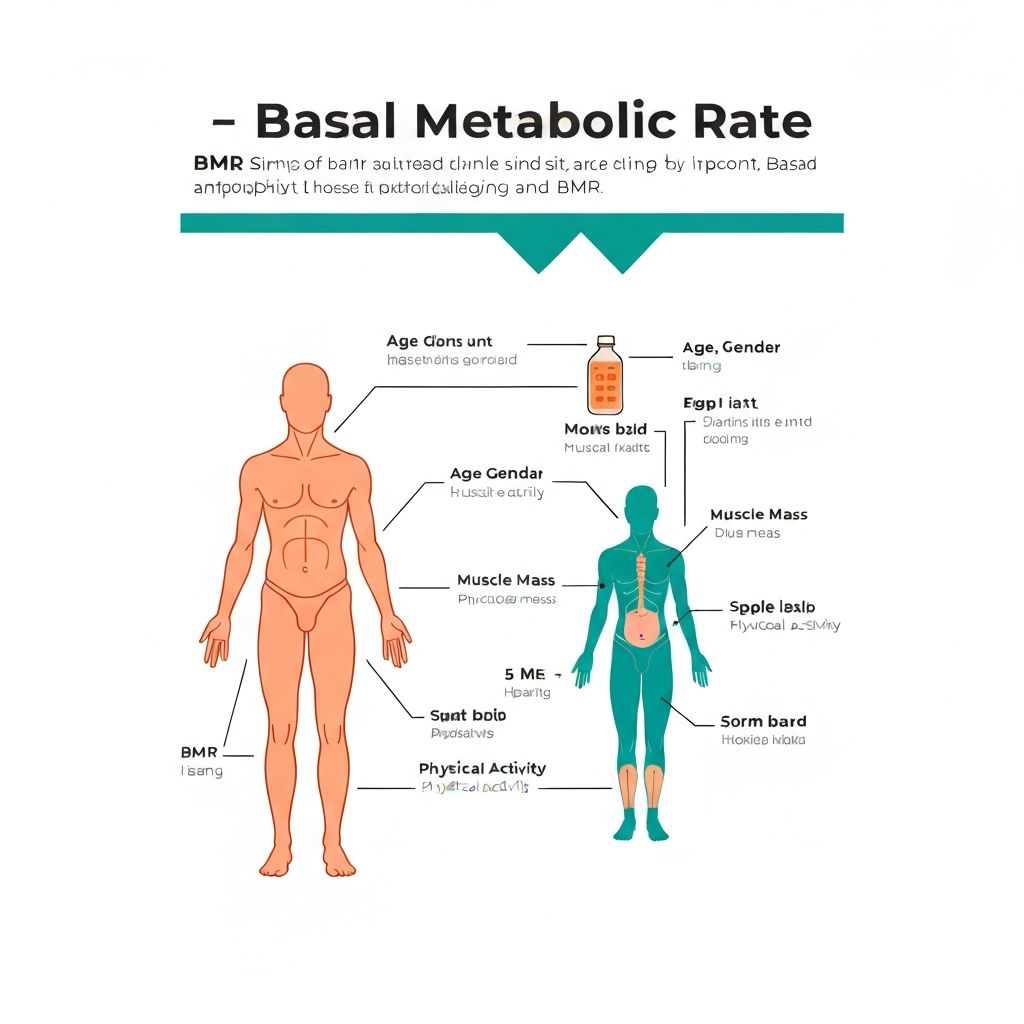
Your BMR isn't the same for everyone. Several things change how many calories your body burns at rest:
Age
As you get older, your metabolism usually slows down. You burn fewer calories at rest each year after about age 25.
Gender
Men usually have a higher BMR than women because they typically have more muscle mass.
Muscle Mass
Muscle burns more calories than fat, even at rest. The more muscle you have, the higher your BMR.
Body Size
Larger people burn more calories to maintain their body size.
Genetics
Some people are born with a naturally faster or slower metabolism than others.
Hormones
Thyroid hormones greatly affect your metabolism. Hormonal changes can increase or decrease your BMR.
Diet & Exercise
Crash dieting can lower your BMR. Regular exercise can increase it over time.
BMR vs TDEE: What's the Difference?
Many people mix up BMR and TDEE. They're related, but they're not the same thing. Let's break it down:
| Aspect | BMR | TDEE |
|---|---|---|
| Definition | Calories burned at complete rest | Total calories burned including activities |
| Includes Exercise | No | Yes |
| Includes Daily Activities | No | Yes |
| Example | 1,500 calories | 2,200 calories |
Simple way to remember: BMR is what you burn doing nothing. TDEE is what you burn living your life. Your TDEE is always higher than your BMR because it includes walking, working, exercising, and all your daily activities.
How to Calculate Your BMR Easily
You don't need a fancy calculator or expensive lab test to find your BMR. You can do it online in seconds.
Gather your info: age, weight, height, and gender
Choose metric (kg, cm) or imperial (lbs, inches) units
Enter your information into a BMR calculator
Get your BMR result instantly
Ready to Calculate?
Use our Mifflin St Jeor Calculator to get accurate results instantly. It takes less than 30 seconds!
Key Takeaways
- ✓BMR is the calories your body burns at rest
- ✓Understanding your BMR helps with weight management and fitness goals
- ✓Age, gender, muscle mass, and genetics affect your BMR
- ✓TDEE (Total Daily Energy Expenditure) is higher than BMR and includes activities
- ✓You can calculate your BMR in seconds using online tools
Frequently Asked Questions
Q: Is BMR the same as metabolism?
A: Not exactly. Your metabolism includes all the calories your body burns throughout the day. BMR is just the resting part. So BMR is part of your total metabolism, but they're not the same thing. Your total metabolism is higher because it includes exercise and daily activities.
Q: Can I increase my BMR?
A: Yes! You can increase your BMR by building muscle through strength training. Muscle burns more calories at rest than fat does. Also, eating enough protein and staying active help maintain or boost your metabolism. Getting enough sleep and managing stress also support a healthy BMR.
Q: Why is my BMR lower than my friend's?
A: Many things affect BMR. If your friend is taller, weighs more, or has more muscle mass, they'll have a higher BMR. Age also matters – younger people typically have higher BMRs. Men usually have higher BMR than women. Even genetics play a role. Everyone's body is different!
Q: Should I eat less than my BMR to lose weight?
A: No, never eat less than your BMR. You need that energy to survive. Instead, eat between your BMR and TDEE for healthy weight loss. This creates a small calorie deficit without harming your metabolism. For example, if your BMR is 1,500 and TDEE is 2,000, eating around 1,750 calories would be healthy weight loss.
Q: How accurate are BMR calculators?
A: BMR calculators using the Mifflin-St Jeor formula are quite accurate – usually within 10-20% of your actual BMR. They're the most scientifically proven method for estimates. The Mifflin-St Jeor formula is more accurate than older methods like the Harris-Benedict equation. For the best results, use calculators that account for age, weight, height, and gender.
Know Your BMR. Achieve Your Goals.
Understanding your BMR is the first step to making smart nutrition choices. Get your personalized BMR calculation today.
Calculate Your BMR Now